Training Certification Guide for Refrigeration Experts & Rookies Alike
If you’re after a practical skill set with solid job prospects, refrigeration training could open up a ton of career options in a fast-growing industry.
Refrigeration training covers everything from the basics of how the cycle works to advanced safety and system operations, so you’re not left guessing when it’s time for real-world work.
With more homes and businesses needing reliable cooling, skilled technicians are in demand.
That doesn’t look like it’ll change anytime soon.
The right education digs deeper than just theory, giving you hands-on experience and the know-how that’s crucial for diagnosing, repairing, and maintaining systems. Most folks start with the fundamentals, then branch into specialized areas like commercial or ammonia systems. There are in-person and online courses, so you can usually find something that fits your schedule and skill level.
If you’re thinking about building a solid technical foundation, online refrigeration training lets you expand your expertise at your own pace. That’s a pretty good deal if you ask me.
Core Principles of Refrigeration
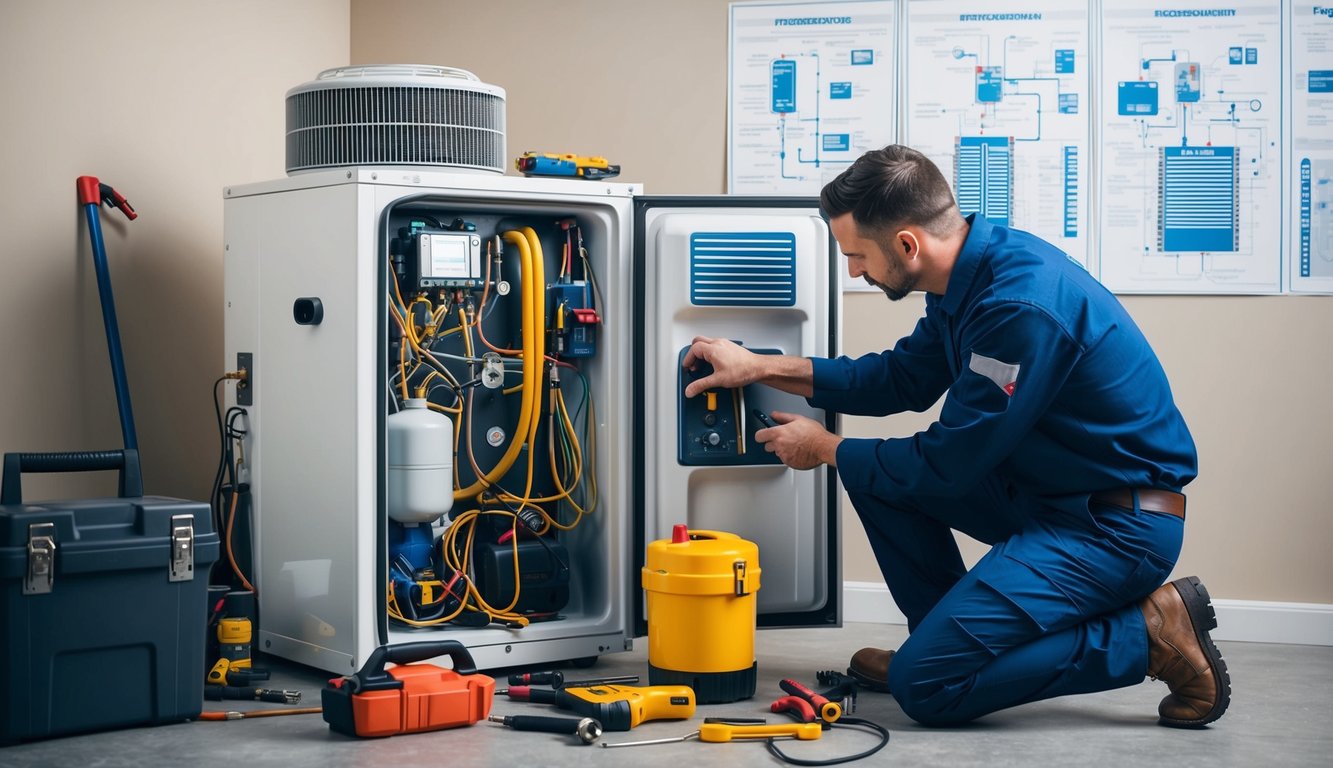
Understanding refrigeration means knowing how we move heat from one spot to another. You need to get familiar with the cycle, what refrigerants do, how compressors work, and how all the pieces fit together in modern systems.
Fundamentals of Refrigeration Cycle
The refrigeration cycle runs on thermodynamic principles—basically, it pulls heat from a cooler space and dumps it somewhere warmer. There are four main stages: evaporation, compression, condensation, and expansion.
Inside the evaporator, the refrigerant grabs heat from inside your fridge or freezer and turns into a vapor. The compressor bumps up the pressure and temperature of that vapor. Then, in the condenser, the refrigerant dumps its heat into the environment and turns back into a liquid. The expansion device drops the pressure, sending the refrigerant back into the evaporator, and the cycle starts over. That’s the backbone of all compression-type refrigeration systems.
Refrigerants and Their Applications
Refrigerants are the fluids that carry heat through the system. Their properties—like boiling point and thermal conductivity—really matter for efficiency and safety. You’ll run into HFCs, hydrocarbons, and ammonia pretty often.
Picking the right refrigerant is a big deal for getting the best performance out of different equipment, whether it’s a home fridge or a massive commercial freezer. You have to match the refrigerant with the pressures and temps your system needs. Messing this up can make systems run poorly or even break down. Want to dig deeper? Check out this guide to refrigeration system principles.
Compressor Operation and Maintenance
The compressor is basically the heart of the system—it pushes refrigerant around by raising its pressure and temperature before the heat gets released. You’ll mostly see reciprocating, rotary, or scroll compressors in the field.
Stay on top of maintenance to keep things running well and avoid breakdowns. That means checking for weird vibrations, keeping an eye on oil levels, and looking out for leaks or odd noises. Preventive care stretches out the compressor’s life and helps you dodge surprise outages. If the compressor acts up, cooling performance drops and energy bills can spike. Knowing how to run and care for compressors is a must in any refrigeration training course.
Refrigeration System Components
Every standard system has a few essentials: the compressor, condenser, expansion device, and evaporator. You’ll also find accessories like valves, filters, and various controls that make everything work smoother.
Each part has its job. The evaporator grabs heat, the compressor boosts pressure, the condenser sheds heat, and the expansion device meters the refrigerant. Accessories help with upkeep, fine-tune temperature control, or add safety. Learning what each piece does helps you troubleshoot or upgrade systems, whether it’s a kitchen fridge or a big HVACR setup.
For a more detailed walk-through, check out this basic refrigeration handout.
Types of Refrigeration Systems
Refrigeration systems are everywhere, each one tailored for its industry. Whether it’s food storage, commercial buildings, or setups that need both cooling and heating, there’s a system built for that.
Some configurations are made for preserving perishables, others for managing massive commercial spaces, and a few even juggle both cooling and heating at once. It’s kind of wild how specific these systems can get.
Commercial Refrigeration Solutions
Commercial refrigeration keeps products fresh in places like restaurants, hotels, and processing plants. Think walk-in coolers, reach-in freezers, and display cases—reliability and even temps are non-negotiable.
These systems rely on compressors, evaporators, and condensers to keep things cool. Digital controls make it easier to hit the right temperature and keep food safe.
Operators worry a lot about system lifespan and maintenance since downtime can be costly. Backup systems and alarms help prevent big losses if something goes wrong.
Supermarket Refrigeration Setups
Supermarkets take things up a notch, with systems that chill, freeze, and keep produce fresh—all at once. Centralized rack systems are pretty common, sending refrigerant throughout the store to various coolers and walk-ins.
You’ll see different temperature zones, like medium-temp for dairy and low-temp for frozen foods. Good airflow and heat exchange are key for keeping food fresh on the shelves.
Advanced controls and remote monitoring flag issues before they get out of hand. If you want to geek out on supermarket refrigeration design, check out Fundamentals of Refrigeration.
CO2 Refrigeration Systems Overview
CO2 systems are popping up more in commercial installs, using carbon dioxide as the main refrigerant. They’re especially efficient at low temps and fit right into existing supermarket or industrial setups.
These often use transcritical cycles, since CO2 behaves a bit differently than traditional refrigerants. Operators need to know about higher-pressure designs—CO2 systems run at higher pressures than most older systems.
CO2 setups are catching on where people want precise temp control and lower refrigerant amounts. For the nitty-gritty, see The Four Types of Refrigeration Systems You Need to Know.
Refrigeration and Air Conditioning Integration
Combining refrigeration with HVAC systems lets facilities run more efficiently. You’ll see this in big buildings where heating, cooling, and ventilation needs overlap.
Some setups share compressors or condensers across systems, which cuts down on energy use and maintenance headaches. Learning both refrigeration and air conditioning is super helpful if you want to work on these integrated systems.
Good integration means better indoor air quality and steady temps, which saves energy and boosts comfort. Hands-on training that covers both areas really pays off. If you’re curious, check out Basic Refrigeration Training System for more info.
Comprehensive Refrigeration Training Programs
Refrigeration training programs mix theory, hands-on practice, and testing so you actually learn the ropes. There are digital and print options, plus courses that offer certificates or other credentials.
Course Curriculum and Learning Objectives
Most courses start with the basics: refrigeration cycles, pressure-temperature stuff, and system components. As you move forward, you’ll tackle things like CO2 refrigeration, tough troubleshooting, and electrical controls.
You’ll get modules on installation, diagnosing faults, preventive maintenance, and handling refrigerants. Courses usually cover both residential and commercial systems, so you can work in different settings.
By the end, you should be able to read schematics, spot system problems, pick the right replacement parts, and keep things running safely. Some programs follow certification guidelines, like elearning in refrigeration and air conditioning, which can boost your resume.
Module Structure and Interactive Exercises
Training modules take you step by step, starting easy and getting more advanced. Lots of courses use digital platforms, so you can go at your own pace—expect videos, presentations, and guided reading.
You’ll work through quizzes, virtual labs, and scenario-based problems. These aren’t just busywork—they’re meant to help you actually get the hang of real-world issues.
Exercises focus on circuit analysis, pressure readings, and control systems. Many programs track your progress in each module, so you can see where you need to brush up. It’s a pretty flexible way to learn, honestly.
End-of-Module Assessments and Certificates
At the end of each module, you’ll tackle assessments—maybe a quiz, a troubleshooting simulation, or a short written answer. These check if you really get the technical concepts.
You’ll usually need to pass these before moving on to the next section. Once you finish all the modules, you get a printable certificate of completion as proof of your new skills.
Some programs let you use these certificates for continuing education or industry certifications. Online courses keep a record of your scores, too. Advanced courses, like CO2 refrigeration training courses, even offer topic-specific certificates that industry groups recognize. Handy for meeting licensing or professional development requirements.
Certifications and Continuing Education
Professional certifications show you’ve hit the mark on industry standards. Keeping up with continuing education not only sharpens your skills but also opens doors for better jobs and career growth down the road.
Section 608 Technician Certification Guide
If you want to handle refrigerants legally, you need Section 608 Technician Certification. There are four types—Type I, Type II, Type III, and Universal—and each one tests your skills on different equipment.
- Type I covers small appliances.
- Type II is for high-pressure systems.
- Type III deals with low-pressure systems.
- Universal encompasses all types above.
The written exams ask about handling, leak detection, recovery, safety, and equipment rules. If you pass, you get a printable certificate, and most employers expect you to have it.
Without this certification, you can’t buy or work with regulated refrigerants. It’s just the way the industry works.
North American Technician Excellence Standards
North American Technician Excellence (NATE) stands out as a top certification for HVACR folks. NATE tests focus on real-world skills and knowledge, covering both the basics and more specialized stuff.
You’ll find exams for service and installation on refrigeration systems. Plenty of prep courses and practice tests are out there if you look around.
To keep your NATE credential, you recertify every two years by earning continuing education hours and passing a renewal exam. It’s a bit of a process, but it keeps your knowledge fresh.
Employers love NATE-certified pros because it shows you actually know what you’re doing. The certificate is printable and recognized just about everywhere in the industry.
Continuing Education Hours and Ongoing Training
Staying certified and up to date means you’ll need ongoing education. Many training programs offer continuing education hours (CEHs) that count toward recertification.
You can grab CEHs through online classes, in-person workshops, or self-study. For instance, some refrigeration training courses include up to 18 CEHs, making it easier to hit renewal targets.
Keep track of your hours—most providers offer digital or printable certificates for your records. Training regularly helps you keep pace with new practices, updated regulations, and tech trends.
Essential Skills for HVACR Technicians
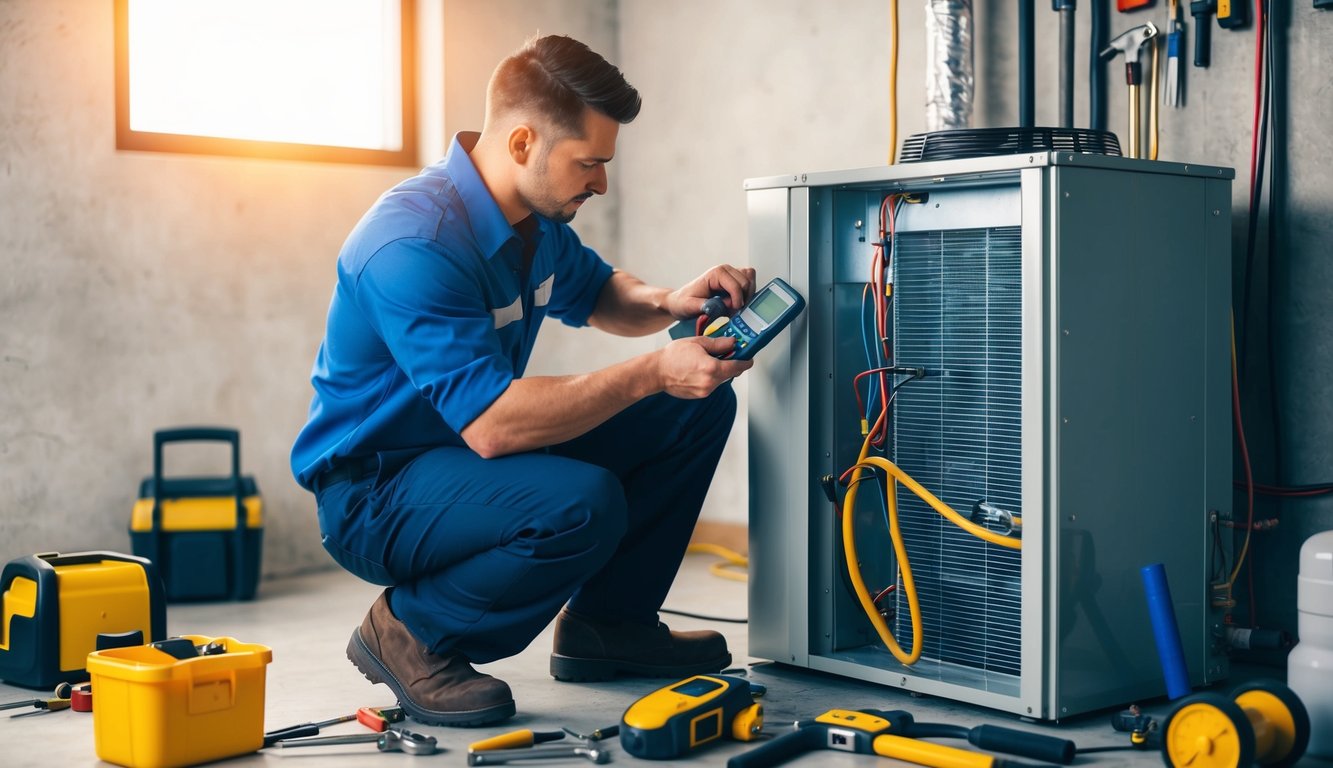
If you’re working in HVACR, you need solid mechanical skills, some electrical know-how, and a clear understanding of how refrigeration systems actually work. Technical knowledge matters, but so does reliability—clients count on you to solve problems and keep things humming.
Service Application and System Issue Resolution
Most days, you’ll need to figure out what’s wrong—sometimes it’s obvious, sometimes not. That means using digital tools, meters, and old-fashioned inspections to pin down electrical, mechanical, or refrigerant issues.
Knowing how to read wiring diagrams, understand the refrigeration cycle, and follow control sequences is key. You’ve also got to see how fans, heat exchangers, and other moving parts all fit together.
Documentation is part of the job, too. You’ll need to talk with other techs and stick to codes and procedures.
A strong background in HVAC system diagnostics and troubleshooting gives you the confidence to handle even the trickiest jobs.
Temperature Control and Regulation
Keeping temperatures steady is what refrigeration is all about. You’ll often set, tweak, and monitor controls to keep products safe and systems running right.
That can mean programming thermostats, calibrating sensors, or working with electronic and pneumatic controls. When temperatures drift, you have to react fast.
Understanding thermodynamics, heat transfer, and insulation makes a big difference. Applying these concepts in the field helps you get better results with temperature regulation.
Optimize Performance and Minimize Downtime
If you can keep systems running at their best, you’ll save money and headaches for everyone involved. Preventive maintenance, swapping out worn parts, and tuning things for efficiency are all part of the routine.
Performance checks mean measuring pressures, temperatures, voltages, and refrigerant levels. You need a sharp eye to spot problems before they turn into emergencies.
Make it a habit to check filters and coils. Use diagnostics and troubleshooting skills to spot patterns—if you see the same issue over and over, it’s time to dig deeper for a permanent fix.
Extend Compressor Lifespan
The compressor is the heart (and the most expensive part) of most refrigeration systems. Keeping it healthy means checking oil, watching for overheating, and making sure the refrigerant charge is right.
Listen for odd noises and keep an eye on pressure readings. Cleaning coils, checking airflow, and tightening electrical connections are all on the checklist.
If you can prevent short cycling and ensure the compressor stays lubricated, you’ll help it last longer. A little extra care here can save a lot of money and hassle down the road.
Career Paths and Professional Development
The refrigeration industry offers plenty of options, whether you want to stick with hands-on work or move into something more specialized. Good training, practical experience, and making connections all help you build a solid career.
Apprenticeship Program and Technical Institutes
Most people start by enrolling in a technical school or signing up for an apprenticeship. These paths mix classroom lessons with real-world, supervised experience.
Apprenticeships last about 3 to 5 years, and you’ll earn while you learn. Technical institutes dive into system theory, troubleshooting, and safe refrigerant handling.
Many programs prep you for certifications, which are a big deal for credibility and moving up. After graduation, you’ll be ready for entry-level jobs and more advanced learning down the line.
Refrigeration Professionals and Installers
There are quite a few roles in this field—installer, service technician, system operator, and more. Installers set up refrigeration units in homes, businesses, or industrial sites.
With experience, you might move into repairs, troubleshooting, or system upgrades. Career growth mostly depends on your technical skills and certifications.
Industry data says HVACR roles are growing at about the national average. Leveling up your skills can lead to supervisor gigs or specialty jobs that need advanced credentials. For more on career options, check out these HVAC career overviews.
Resume Building and Industry Networking
When you put together your resume, make sure to highlight technical skills, certifications, and any hands-on work from apprenticeships or past jobs. List out the equipment and systems you’ve actually worked on—employers notice that stuff.
Networking really matters. Go to trade shows, join industry groups, or jump into online forums to meet mentors and find job leads.
Getting involved in communities like HVAC focused platforms can introduce you to new tech and career paths. Keep your resume fresh and stay connected to stay ahead.
Learning Resources and Industry Support
Growing as a refrigeration pro means finding good organizations, learning from experts, and keeping up with the latest technical info. Trusted resources help you stay sharp and aware of what’s changing in the industry.
Role of Refrigeration Service Engineers Society (RSES)
The Refrigeration Service Engineers Society (RSES) plays a big part in supporting techs. Members get access to a ton of educational tools, like the well-known Service Application Manual, technical bulletins, and troubleshooting guides.
The RSES Journal offers monthly technical articles and news on new technologies. RSES also helps with certification, which employers value and sometimes require for compliance.
Getting involved with RSES means you can join forums, find mentors, and get exam prep resources made just for refrigeration professionals.
HVACR Industry Experts and Thought Leadership
Learning from HVACR experts gives you real-world insights you just can’t get from books. These folks share best practices, point out common mistakes, and bring in examples from their own work.
Many training programs bring in experienced instructors with top credentials and years in the field. Online resources like the HVACR Learning Network and Refrigeration Mentor offer on-demand content and direct lessons from industry leaders.
Jumping into Q&A sessions, roundtables, or panel talks with veterans helps you pick up practical tips and stay up to date with what’s changing out there.
Journals, Blogs, and Webinars
Keeping up with new refrigeration tech and troubleshooting tricks is easier than ever. The RSES Journal is a go-to for monthly technical reports, how-to articles, and code updates.
Technical blogs break down niche topics, review products, and compare options in plain language. Webinars—live or recorded—let you watch demos, ask questions, and dive deep into components and diagnostics.
Lots of professional groups and learning sites run their own webinars and post reading materials, so you’ve got plenty of ways to keep learning.
Frequently Asked Questions
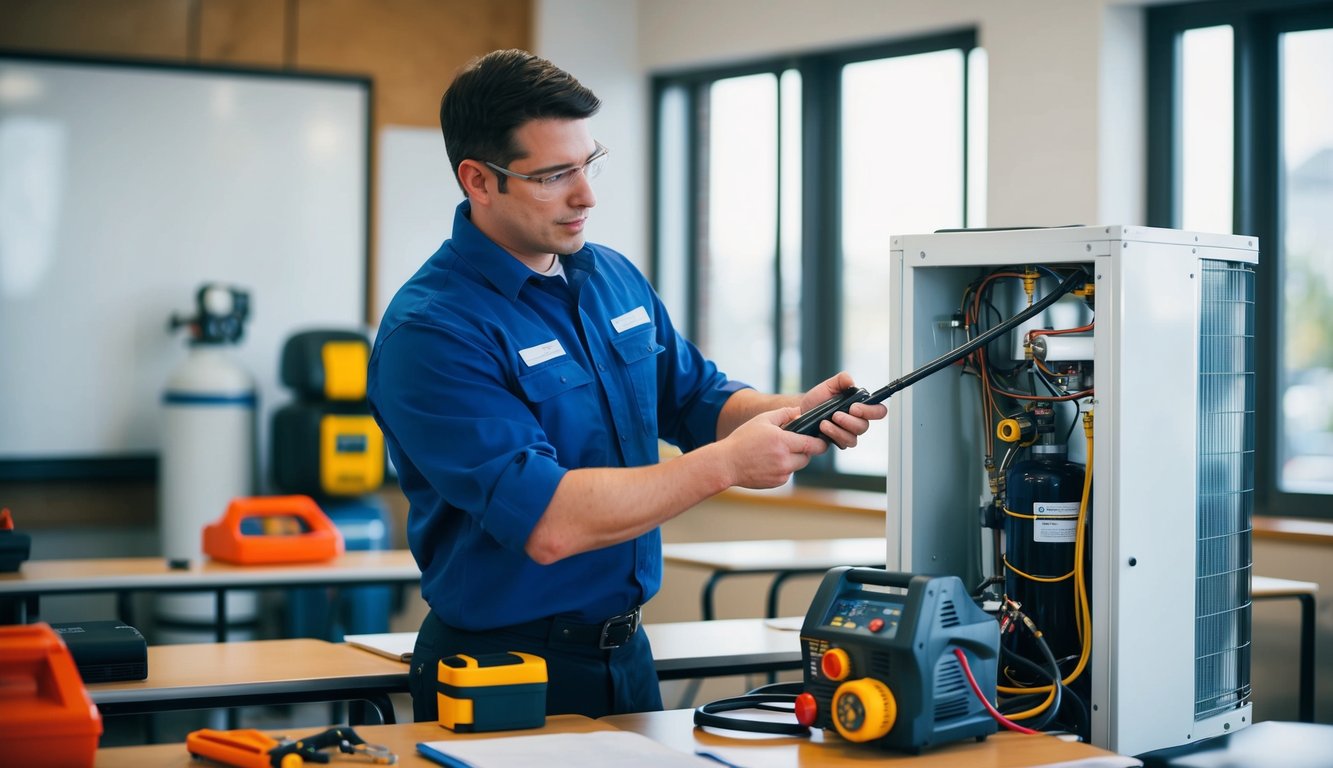
Refrigeration training programs come in all shapes and sizes. You’ll find in-person classes, online modules, and options for both beginners and seasoned techs.
How long does it typically take to complete a refrigeration training course?
Most entry-level refrigeration programs run anywhere from a few weeks to a few months. Some detailed technical courses take about 450 hours, usually spread over several months with classes a few times a week.
How long it takes really depends on whether you go full time or part time.
Where can I find refrigeration certification programs near my location?
Vocational schools and technical institutes in your area probably offer refrigeration certification programs. Search the websites of local trade schools or community colleges to see what’s nearby.
You’ll usually find enrollment info and schedules right on the admissions or FAQ pages, so you can see what fits your situation.
Are there any reputable online courses for refrigeration training available?
Yes, there are solid online refrigeration courses if you need to learn remotely. These programs often blend self-paced lessons with live, instructor-led sessions online.
You’ll usually get interactive simulations and assessments to help you build practical skills.
What are the prerequisites for enrolling in a commercial refrigeration training program?
Most programs ask for a high school diploma or GED. Some might want you to have basic math and science skills, or finish a bit of preliminary coursework.
Always check the requirements listed by the program before you apply, just in case there’s something specific you need.
Can I access refrigeration training materials for free online?
You can find free guides, videos, and sample quizzes on educational sites and industry forums. These free resources are great for getting started, but full certification courses usually require paid enrollment.
What are the key topics covered in an industrial refrigeration training course?
Industrial refrigeration training dives into electrical systems and the nuts and bolts of refrigeration cycles. You’ll also find plenty on troubleshooting, installation, and maintenance.
Safety practices get a lot of attention too. Some programs even bring in EPA regulations for handling refrigerants, especially if your sector requires it—check out the EPA section 608 technician certification requirements for more on that.

