See Clearly. See Better
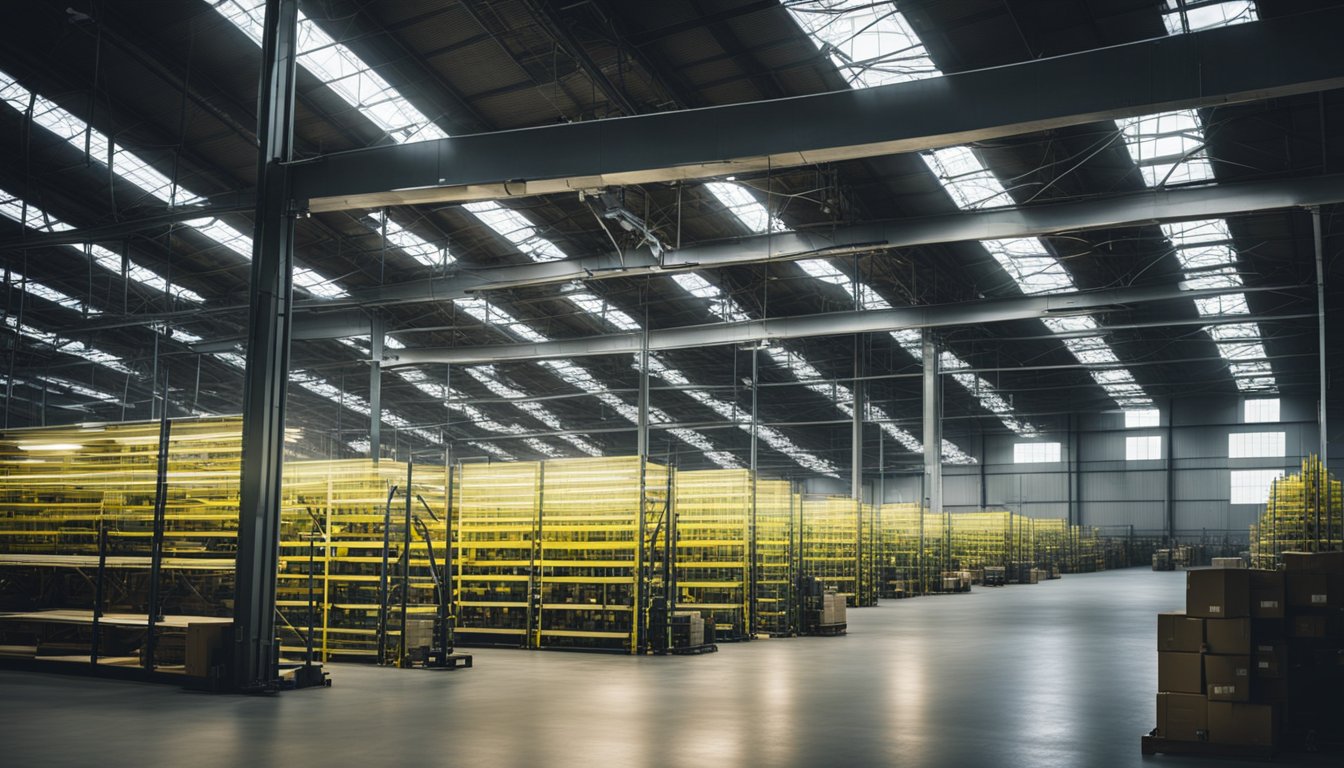
Lighting plays a crucial role in industrial warehouses. Good lighting helps workers see clearly, move safely, and do their jobs well. It also saves money on energy bills.
LED warehouse lighting can cut energy use by up to 75% compared to older types of lights. This means big savings for warehouse owners. LED lights last longer too, so you won’t need to replace them as often.
The right lighting makes a warehouse safer. It reduces shadows and dark spots where accidents can happen. Bright, even light helps workers see hazards and move around without bumping into things. This cuts down on mistakes and injuries, making the whole warehouse run better.
Fundamentals of Industrial Warehouse Lighting
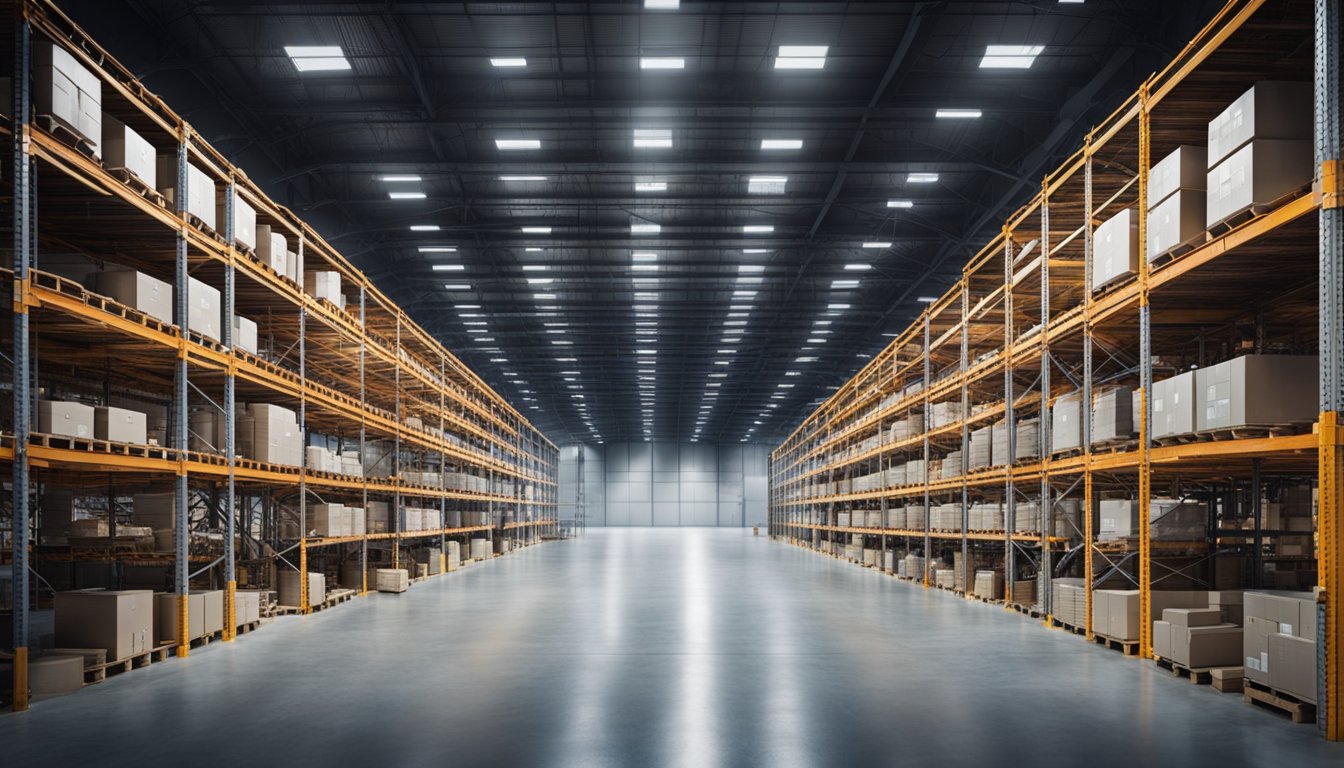
Industrial warehouse lighting plays a key role in safety, productivity, and efficiency. The right lighting setup can make a big difference in how well a warehouse runs.
Importance of Adequate Lighting
Good lighting in warehouses is crucial. It helps prevent accidents and keeps workers safe. With proper lighting, you can spot hazards easily and move around safely.
Bright, even light makes it easier to read labels and find items quickly. This boosts productivity and cuts down on mistakes. Workers feel less eye strain and fatigue when the lighting is just right.
Proper industrial warehouse lighting can also save you money. It reduces energy costs and the need for extra task lighting. Plus, it can lower insurance rates by making the workplace safer.
Types of Lighting Fixtures
There are several types of lighting fixtures for warehouses. Each has its own benefits.
High bay lights are common in tall warehouses. They provide wide, bright light coverage from high ceilings. LED high bay lights are becoming more popular due to their efficiency.
LED warehouse lighting uses less power and lasts longer than other types. It gives off less heat and can be dimmed easily. This makes it a flexible choice for many spaces.
Fluorescent lights are another option. They work well in areas with lower ceilings. T5 and T8 fluorescent tubes are often used in warehouse settings.
Motion sensor lights can help save energy. They turn on only when needed, which cuts down on electricity use. These are great for areas that aren’t always in use.
Lighting Design and Efficiency
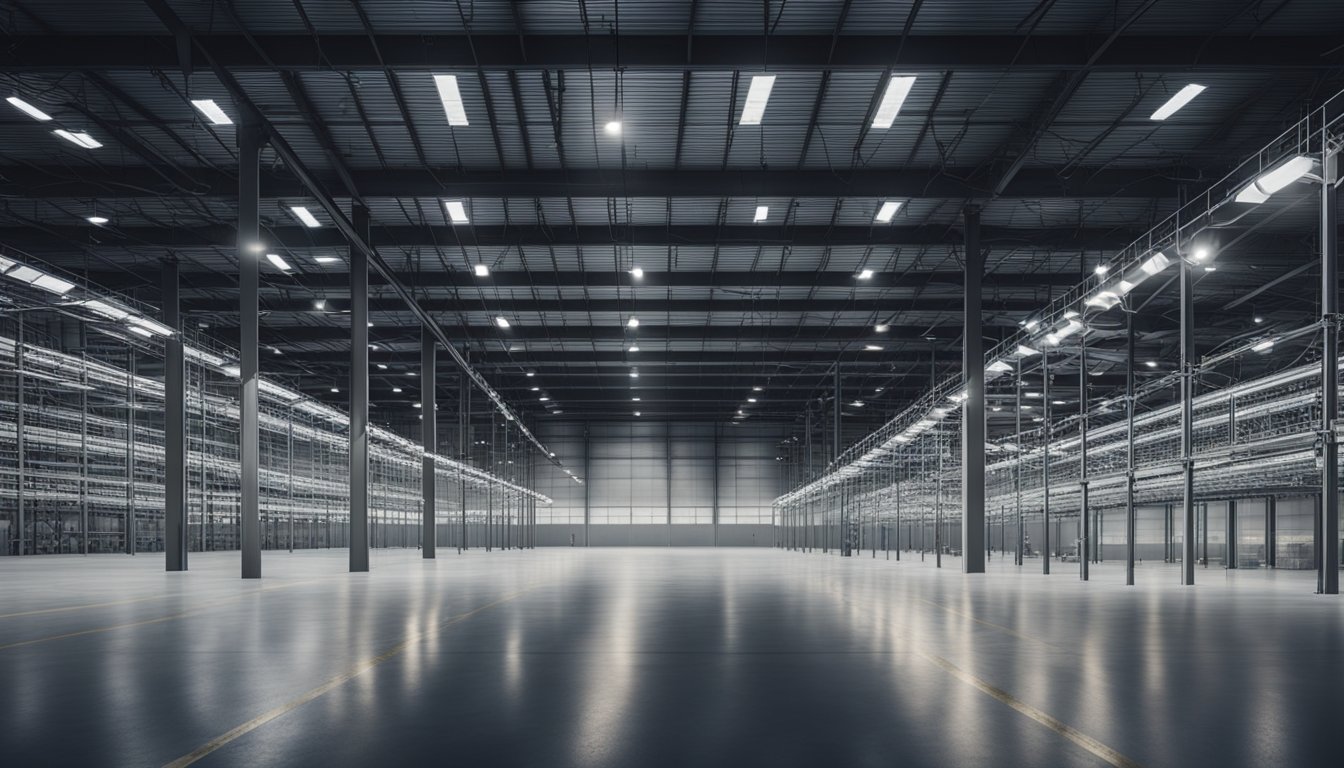
Proper lighting design and efficiency are key to creating a safe and productive warehouse environment. The right setup can boost worker performance, reduce energy costs, and improve overall operations.
Optimizing Lighting Layout
A well-planned lighting layout is crucial for warehouse efficiency. You should consider the height of shelving units, aisle width, and work areas when designing your layout.
Place fixtures strategically to minimize shadows and glare. This helps prevent accidents and improves visibility for workers handling materials or operating machinery.
Use task lighting in specific areas that need extra illumination. This can include picking zones, packing stations, or quality control areas.
Consider using motion sensors in less-frequented areas. This can save energy by only activating lights when needed.
High Bay and Low Bay Lighting
The choice between high bay and low bay lighting depends on your warehouse ceiling height. High bay lights are best for ceilings over 20 feet, while low bay fixtures work well in spaces under 20 feet.
High bay lights typically produce 30,000 lumens or more. They provide wide, even light distribution across large areas. This makes them ideal for open storage spaces and wide aisles.
Low bay lighting is more focused. It’s perfect for warehouses with lower ceilings or areas that need concentrated light. These fixtures often use reflectors to direct light downward, improving efficiency.
Both types are available in LED options, offering energy savings and long lifespans.
Energy Efficiency and LED Technology
LED technology has revolutionized warehouse lighting. LED fixtures use less energy and last longer than traditional options. This leads to significant cost savings over time.
LED lights also offer better color rendering. This helps workers identify products more easily and reduces errors in picking and packing.
LED high bays can replace older metal halide or fluorescent fixtures. They provide instant-on lighting without warm-up time. This is especially useful in cold storage areas.
Many LED systems allow for dimming and smart controls. You can adjust light levels based on time of day or occupancy. This further increases energy efficiency and reduces operating costs.
Safety and Productivity in Lighting
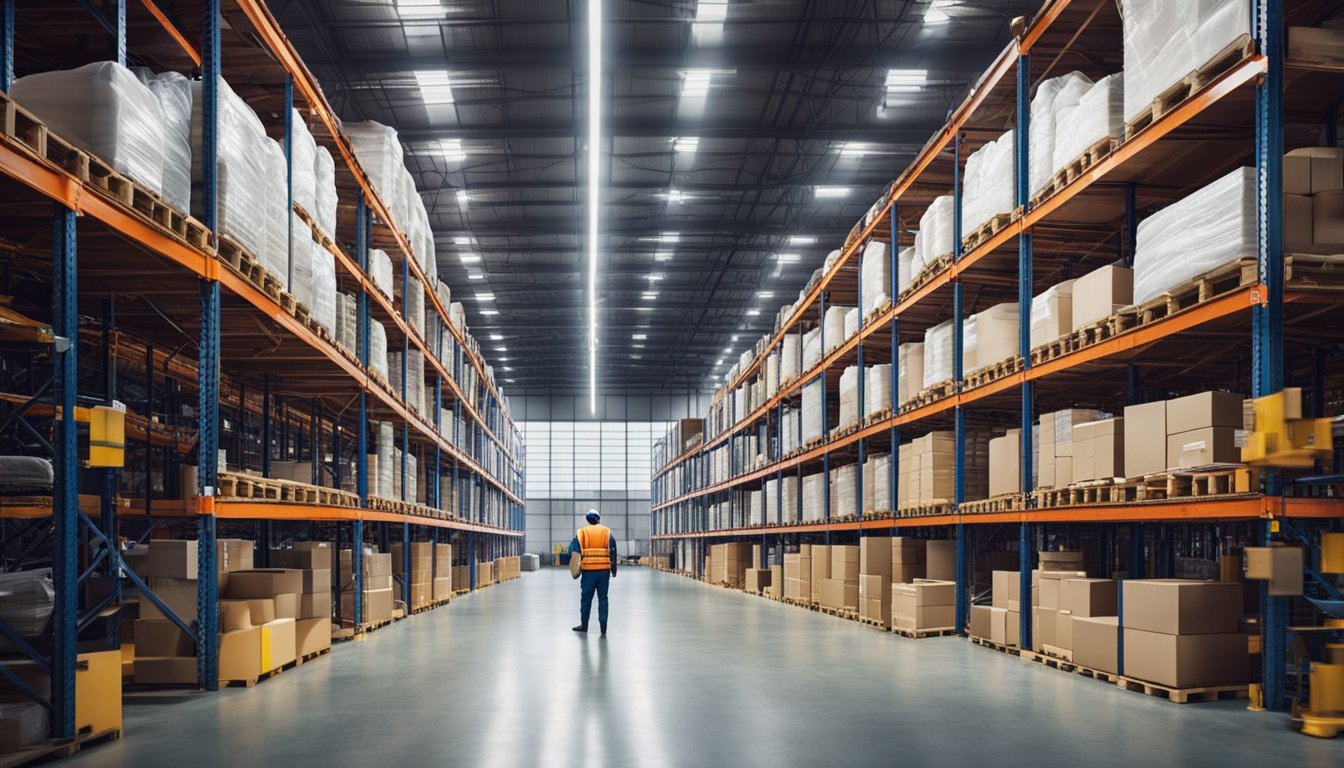
Good lighting in warehouses helps keep workers safe and makes them more productive. It cuts down on accidents and helps people do their jobs better.
Illuminating for Worker Safety
Proper lighting is key for worker safety in warehouses. You need to light up all areas well, including aisles, storage zones, and loading docks. Bright, even light helps prevent trips and falls. It also makes it easier to spot hazards.
Use lights that don’t create glare or harsh shadows. These can hide dangers or cause eye strain. LED lights are a good choice. They give off clear, steady light without flickering.
Make sure emergency exits are well-lit. Use backup lights in case the power goes out. Check light levels often to keep them at safe levels.
Enhancing Productivity with Proper Lighting
Good lighting boosts productivity in warehouses. It helps workers see details better and work faster. Bright, even light reduces eye strain and headaches. This keeps workers alert and focused.
Use task lighting for detailed work. It helps workers see small parts or read labels easily. Adjust light levels based on the task. Brighter isn’t always better.
Natural light can improve mood and energy. Use skylights or large windows if possible. But control glare and heat from sunlight.
Smart lighting systems can help. They adjust light levels based on time of day or activity. This saves energy and keeps light levels right for each task.
Advanced Lighting Technologies
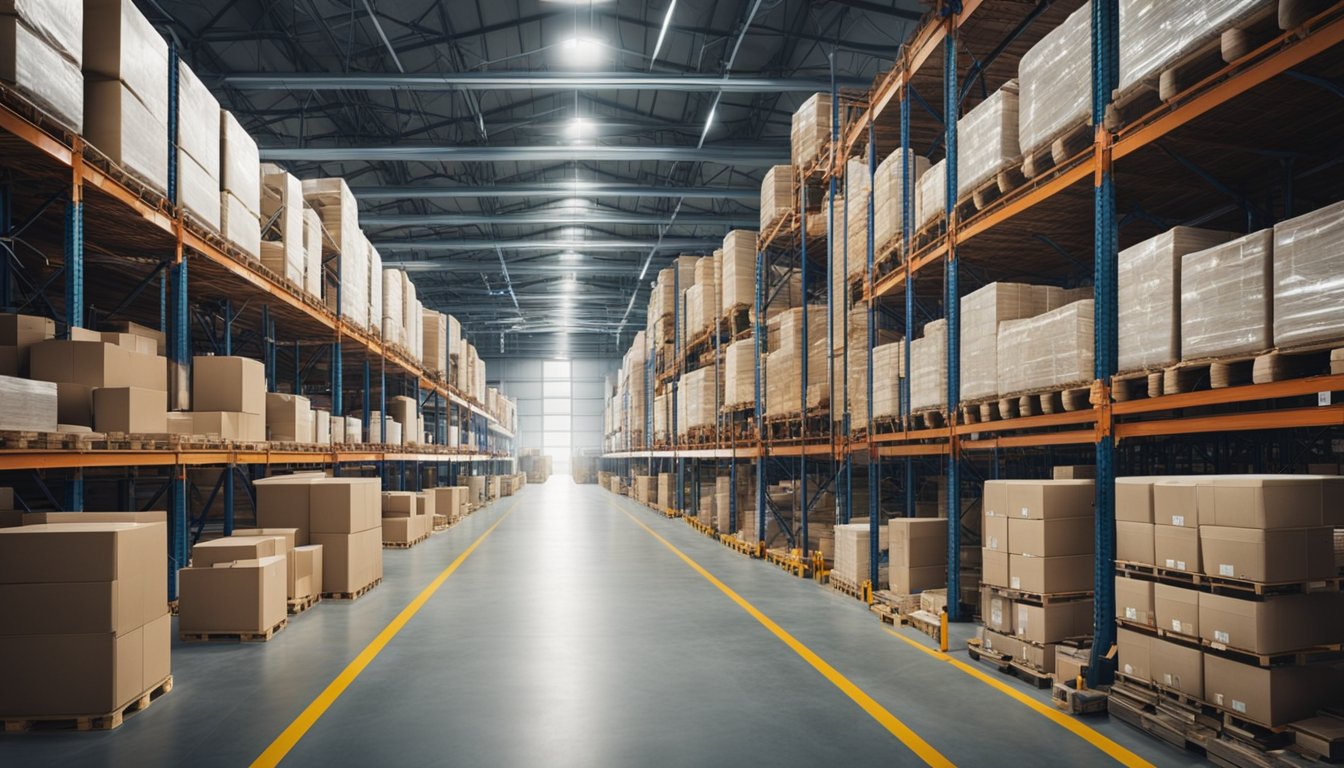
New lighting technologies are changing how warehouses light their spaces. These systems offer better control and lower costs.
Smart and Connected Lighting Systems
Smart lighting systems use sensors and networks to adjust light levels automatically. You can program lights to dim or turn off when areas are empty. This saves energy and money. Some systems let you control lights from your phone or computer.
Connected lighting can work with other building systems too. It can share data about how spaces are used. This helps you make better choices about your warehouse layout.
These systems often use LED lights. LEDs last longer and use less power than older bulbs. They also give off less heat, which can lower cooling costs in summer.
Maintenance and Operating Cost Reduction
New lighting tech can cut your costs in big ways. LED lights need less upkeep than older types. They can last for years without needing to be changed.
LED high bay lights are great for tall warehouse spaces. They spread light evenly and don’t need to warm up. This means you can turn them on and off quickly as needed.
Some new systems use modular wiring. This makes it easy to move or add lights as your needs change. You won’t need to rewire everything, saving time and money.
Color temperature is important too. Cooler light can help workers stay alert. Warmer light is better for areas where people need to relax. New tech lets you change the color temp as needed throughout the day.

