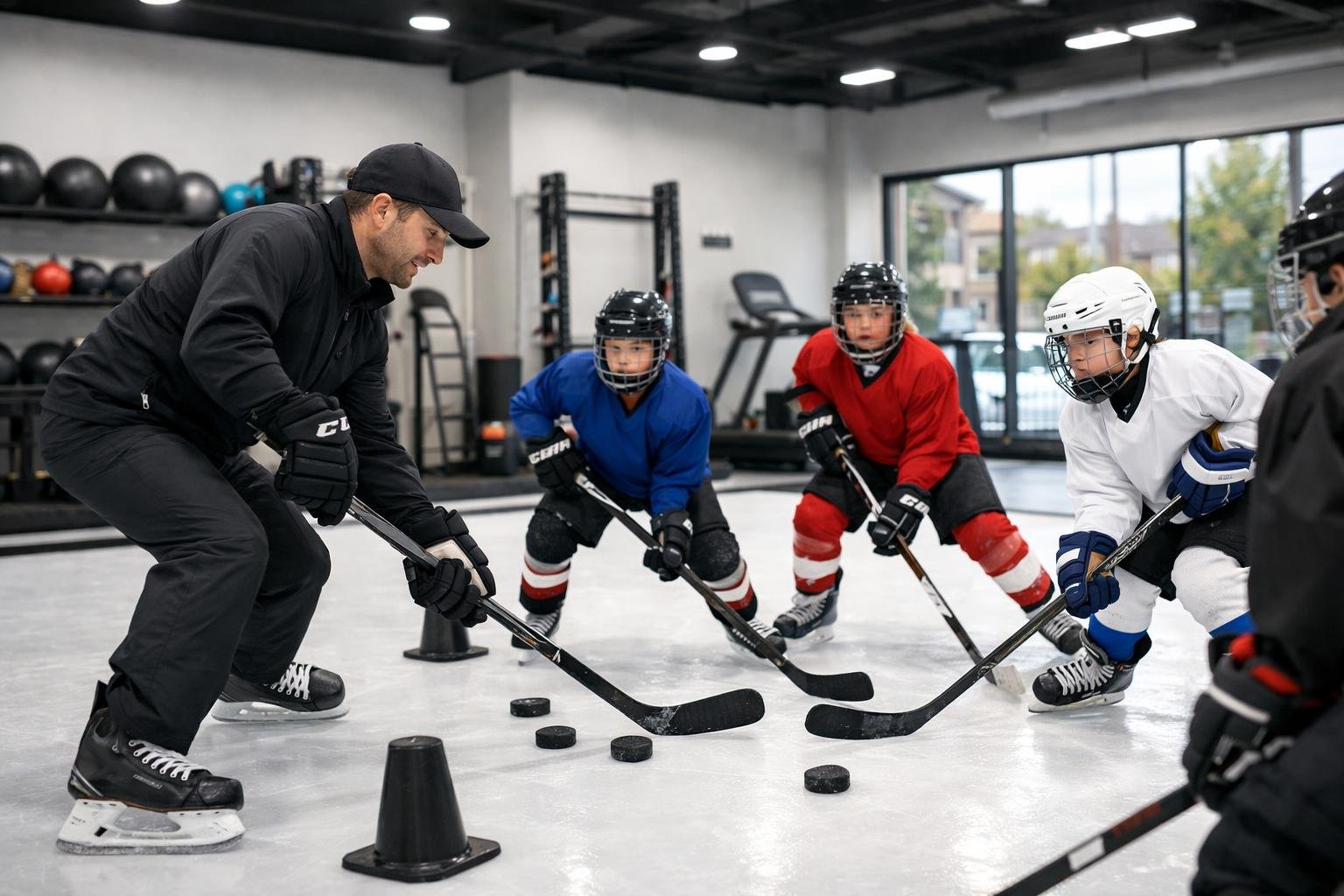
Hockey Skills Development in Newmarket with The Exercise Lab
Expert Training and Athlete Success
Hockey skills development in Newmarket with The Exercise Lab gives players a clear path to build strength, speed, and control before the season starts. You want structured training that fits your age, level, and goals.
The right program helps you improve skating power, balance, and on-ice performance through focused off-ice work.
The team at The Exercise Lab — located at 210 Pony Dr Unit 2, Newmarket, ON — works with athletes from U10 through junior and collegiate levels. Coaches use small group sessions capped at 8–10 players and proven training methods to help players develop strong movement patterns and better habits.
You gain targeted hockey training that builds speed, strength, and explosive power in a focused setting.
This article breaks down how the programs work and what areas they train. You will also see how scheduling, group placement, and facility details support steady development throughout the off-season.
Overview of Hockey Skills Development Programs
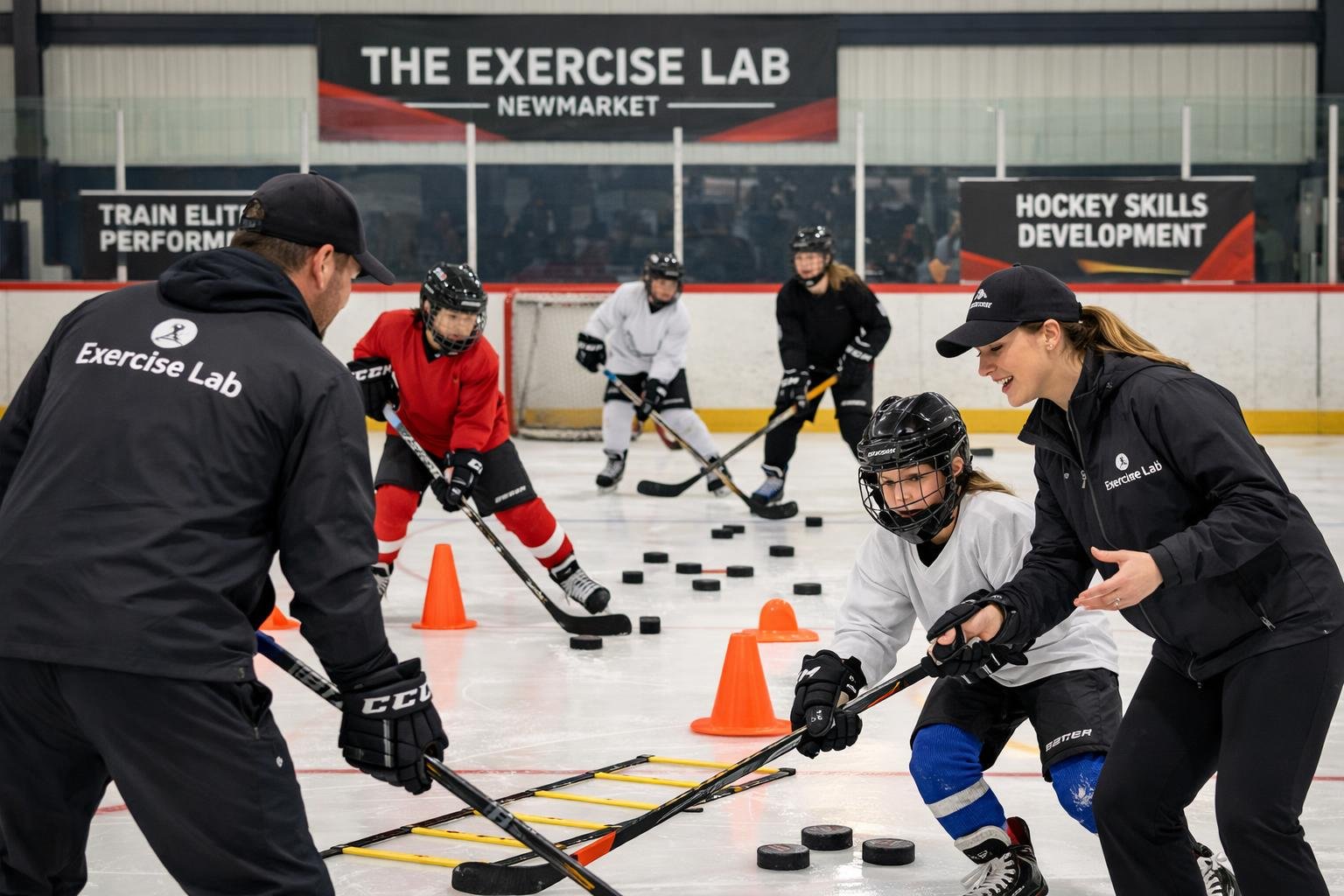
Hockey skills development in Newmarket with The Exercise Lab centers on structured training, age-specific progressions, and alignment with recognized hockey development models. Programs focus on skating mechanics, puck control, shooting, and game awareness through repeatable drills and measured feedback.
Types of Training Sessions Offered
The Exercise Lab delivers training in three main formats: small group sessions, private lessons, and specialty clinics.
Small group sessions cap enrollment at 8–10 players per coach. This allows direct correction of stride mechanics, edge control, and puck handling under pressure. Groups are split into open and elite (AA-AAA+) streams so athletes train with peers at a comparable level.
Private lessons focus on individual skating posture, stride length, crossover efficiency, and shot release speed. Coaches often use video review and timed drills to track progress.
Specialty clinics target scoring, agility, or goaltending. The Exercise Lab adjusts intensity to match each athlete’s stage of development, keeping training competitive without pushing players beyond what their bodies can handle.
Athlete Skill Levels and Age Groups Supported
The Exercise Lab supports players from early development stages through advanced competitive levels. Athletes are grouped by their upcoming season division and level across Developmental and Elite streams.
Beginner athletes work on balance, forward stride, stopping, and basic puck control. Coaches build on those basics with repeated skill blocks and clear performance goals.
For U10 to U13 players, sessions increase in pace and complexity. Drills combine skating transitions, tight turns, and passing under pressure. Skating, puck handling, and shooting receive equal focus at this stage.
Older athletes — U14 through U18 and beyond — train with position-specific drills, small-area games, and off-ice strength sessions. Coaches track metrics such as sprint times, shot accuracy, and shift length to measure development over time.
Alignment with National Development Standards
The Exercise Lab aligns its curriculum with national player pathways to support long-term development. Hockey Canada outlines a structured progression model that balances skill growth, competition, and academic priorities through its Canadian Development Model.
The Exercise Lab uses this framework to guide age-appropriate training volume and drill selection. As proud partners of the Newmarket Minor Hockey Association and Upper York Minor Hockey Association, the facility coordinates with local associations to ensure on-ice training supports team play, league expectations, and long-term athlete progression.
The Exercise Lab’s Off-Season Hockey Programs
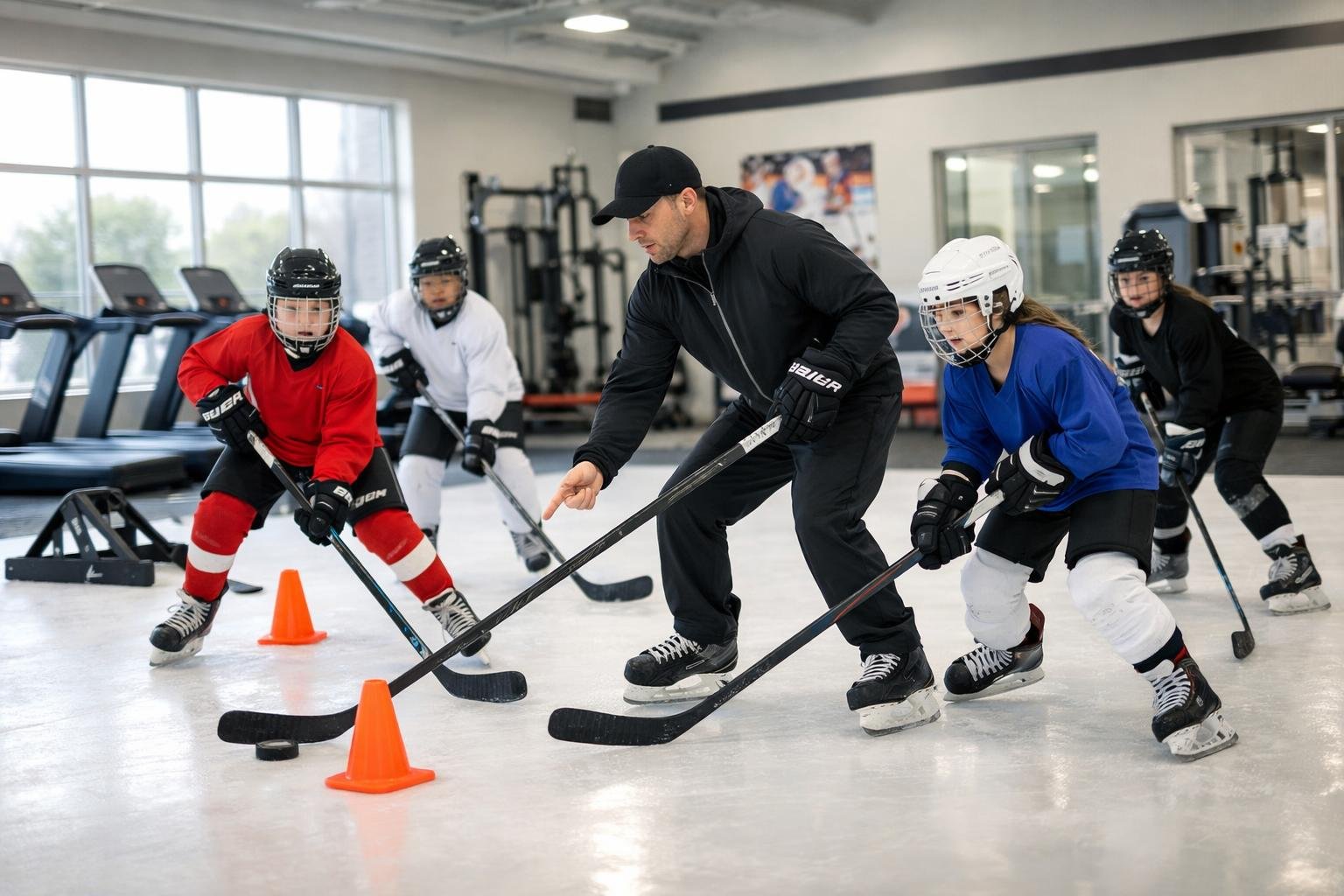
The Exercise Lab builds hockey players through structured seasonal programs, focused group sessions, and experienced coaching. Each part of the system targets speed, strength, skill, and long-term development.
Spring and Summer Program Structure
The Exercise Lab runs a detailed Off-Season Hockey Development Program designed for players who want measurable progress before the next season.
The Spring Program runs from May 4 to June 25, 2026, Monday through Thursday. Athletes choose between two or three sessions per week, each lasting one hour. Open groups train at 5:00–6:00 PM and 7:00–8:00 PM, while Elite (AA-AAA+) athletes train at 6:00–7:00 PM.
The Summer Program runs from June 29 to August 21, 2026, with options for three to five sessions per week. This block is the cornerstone of off-season training — designed to take everything built in spring and turn it into a faster, stronger, and more explosive athlete.
Sessions focus on:
- Lower-body strength for skating power
- Linear and lateral speed
- Core stability and balance
- Explosive movements like jumps and medicine ball throws
- Injury prevention habits
Elite athletes who book open time slots still receive adjusted programming from the trainer to match their level.
Team and Small Group Training Benefits
The Exercise Lab supports team-based dryland sessions alongside its individual athlete programs. These structured workouts keep teams aligned in their off-ice development.
Small group training creates a focused setting. Athletes receive direct feedback while still training in a competitive environment. Coaches correct stride mechanics, squat depth, or sprint form in real time. Key benefits include:
- Consistent progress tracking
- Clear performance standards
- Accountability within the group
- Reduced injury risk through supervised technique
Training with teammates also improves communication and work habits. Players learn how to push pace without sacrificing form.
Expert Coaching Staff
The Exercise Lab relies on coaches with extensive playing and evaluation experience.
Jason Ricci, President and Chief Instructor of All-Star Hockey School, played professional hockey as a defenceman for seven years across Europe and North America. He brings more than 25 years of teaching and coaching experience to every session. His background includes NCAA education and coaching roles at GTHL, OWHA, and Hockey Canada High Performance levels. He has also served as a skills evaluator for USA Hockey’s U18 Women’s National Team and BCHL identification camps.
Steve Rachikowski, Senior Manager with Central Scouting, works alongside NHL scouts who evaluate top prospects worldwide. As coach of the 2003 Toronto Marlboros Minor Midget AAA program, he helped develop 13 OHL draft picks and 7 NHL draft selections. He is also joining the York Simcoe Express U13 AAA coaching staff for 2026–27.
The off-season program also features professional player mentorship. Current and former NHL and PWHL players join sessions to share their experiences and give athletes a direct look at what the path forward requires.
Advanced Training Focus Areas
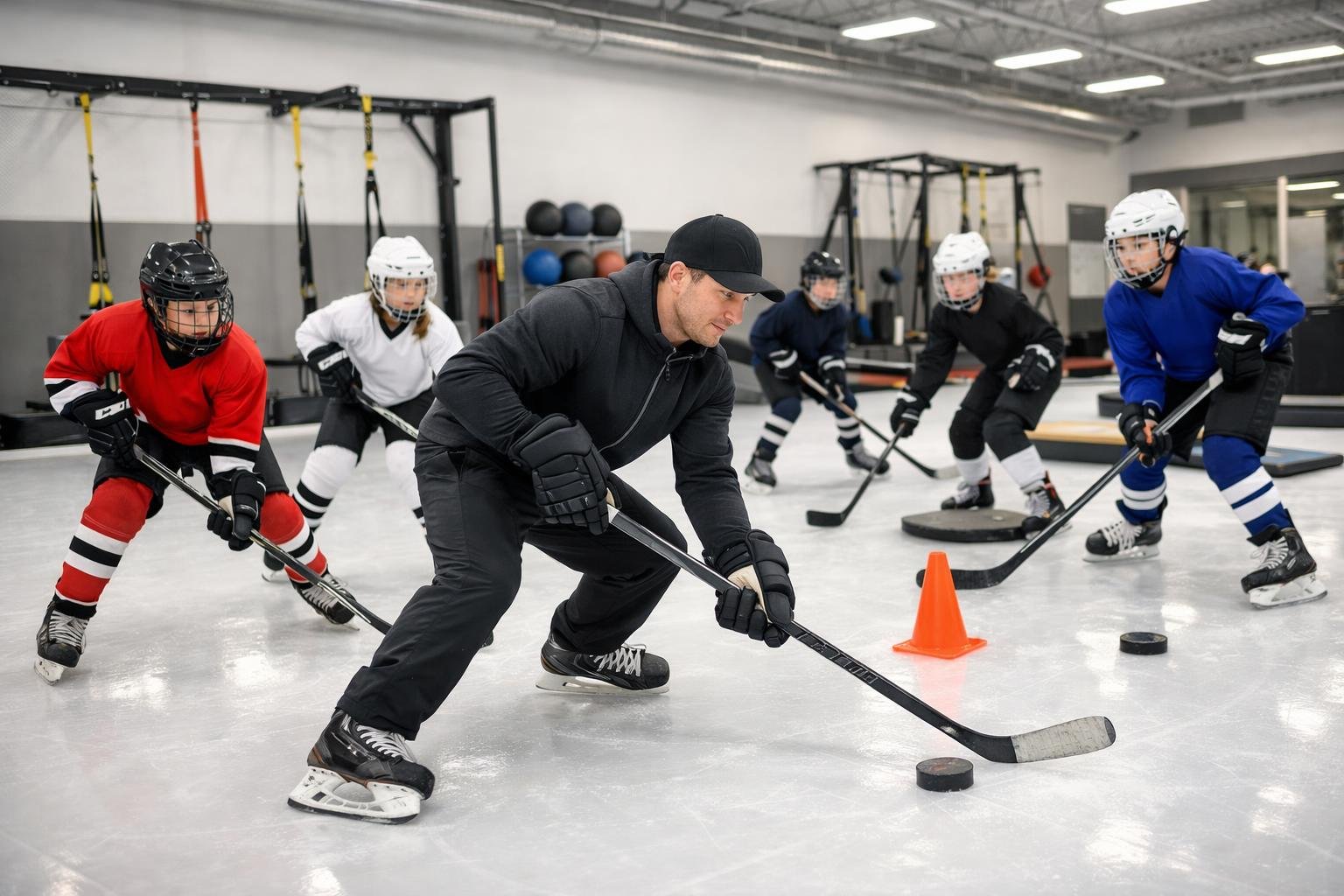
Serious hockey players need more than ice time. They need structured strength work, targeted recovery, and clear nutrition habits that support speed, power, and long-term progress.
Hockey-Specific Strength and Conditioning
The Exercise Lab builds programs around the physical demands of hockey. Coaches train lower-body strength with squats, trap bar deadlifts, and split squats to improve stride power. They pair this work with plyometrics to raise explosive output, which supports faster starts and harder shots.
Sessions also include agility drills that sharpen edge control and first-step quickness. Athletes follow structured off-season plans that run multiple days per week and focus on steady strength gains, proper technique, and position-specific needs.
Research shows that resistance training can increase skating speed and shot power when paired with skill practice. Coaches track load, reps, and movement quality to reduce plateaus and support steady improvement.
Mobility, Recovery, and Injury Prevention
Hockey places stress on hips, groin, and shoulders. The Exercise Lab addresses this with mobility drills that target hip rotation, ankle range, and thoracic spine movement.
Athletes use dynamic warm-ups before lifts and structured cool-down work after sessions. Foam rolling, band work, and controlled stretching support tissue health and reduce stiffness between skates.
Strength balance also plays a key role. Coaches train hamstrings, glutes, and core muscles to stabilize the pelvis and protect the lower back. They monitor single-leg strength to correct imbalances that may raise injury risk. Studies in youth and elite hockey show that structured neuromuscular training can lower injury rates, especially in the groin and knee.
Consistent screening and load management help athletes stay on the ice during long seasons.
Sports Nutrition Guidance
Nutrition education is built into the program. Athletes learn how to fuel properly for performance, recovery, and long-term development.
Players learn to space meals across the day and include protein at each feeding. Research suggests that roughly 0.3 grams of protein per kilogram of body weight per meal can support muscle repair when spread evenly.
Hydration also receives attention. Even mild dehydration can lower sprint performance and focus, both of which matter in hockey shifts that last 30 to 60 seconds. Coaches guide athletes to match carbohydrate intake with training volume — hard lift days and intense skates require more fuel than light recovery sessions.
Clear plans remove guesswork and help athletes maintain energy, strength, and body composition through the season.
Athlete Success Stories and Client Experiences
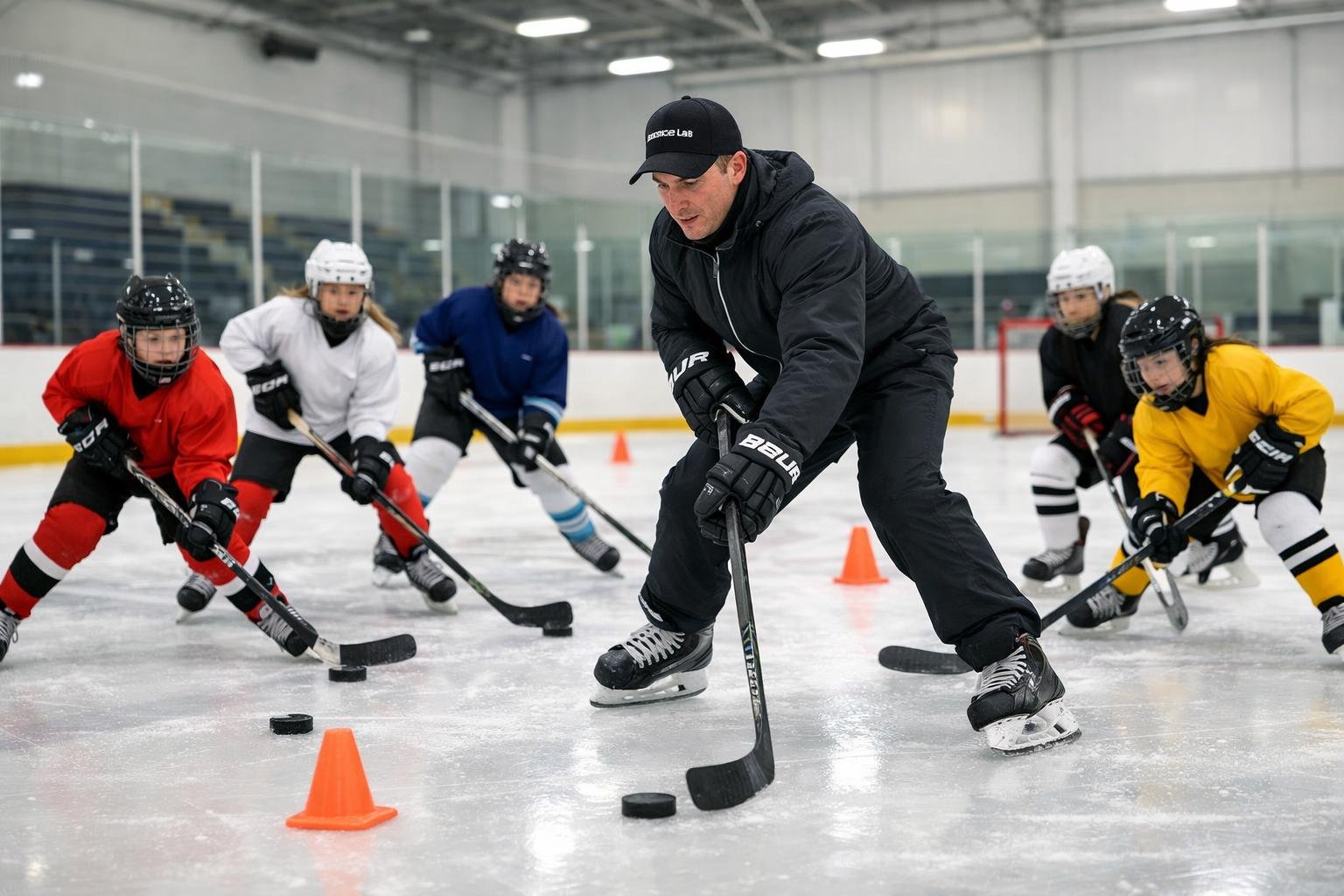
Young players and teams have shown clear progress through structured training at The Exercise Lab. Measurable strength gains and direct feedback from families highlight how focused coaching shapes hockey performance.
Transformation Case Studies
Several youth hockey players trained at The Exercise Lab during the off-season to improve speed and strength. One 9-year-old athlete joined with his team to build lower-body power and balance. Coaches focused on proper squat form, core control, and sprint mechanics.
Over a 12-week block, he increased his squat load and improved timed sprint tests used in sessions. Parents reported better stability on the ice and stronger puck battles along the boards.
Trainers tracked movement quality to lower injury risk, which aligns with research from the National Strength and Conditioning Association showing that supervised strength training supports safer youth development.
Each program stayed structured:
- Initial movement screen
- Clear strength targets
- Weekly progress tracking
- Adjustments based on fatigue and growth
This step-by-step plan helped athletes build skills that transfer directly to hockey.
Feedback From Hockey Players and Teams
Families and teams describe sessions as organized and focused. Players report that coaches explain drills in simple steps, correct posture, adjust loads, and keep sessions moving. Teams value that trainers balance discipline with encouragement.
Common feedback includes:
- Noticeable gains in strength
- Better conditioning late in games
- Clear communication with parents
- Structured team sessions
The Exercise Lab also emphasizes direct coaching attention. Athletes receive individualized feedback instead of rotating through crowded stations. This approach builds trust with families and helps players stay consistent through long hockey seasons.
Registration, Scheduling, and Facility Details
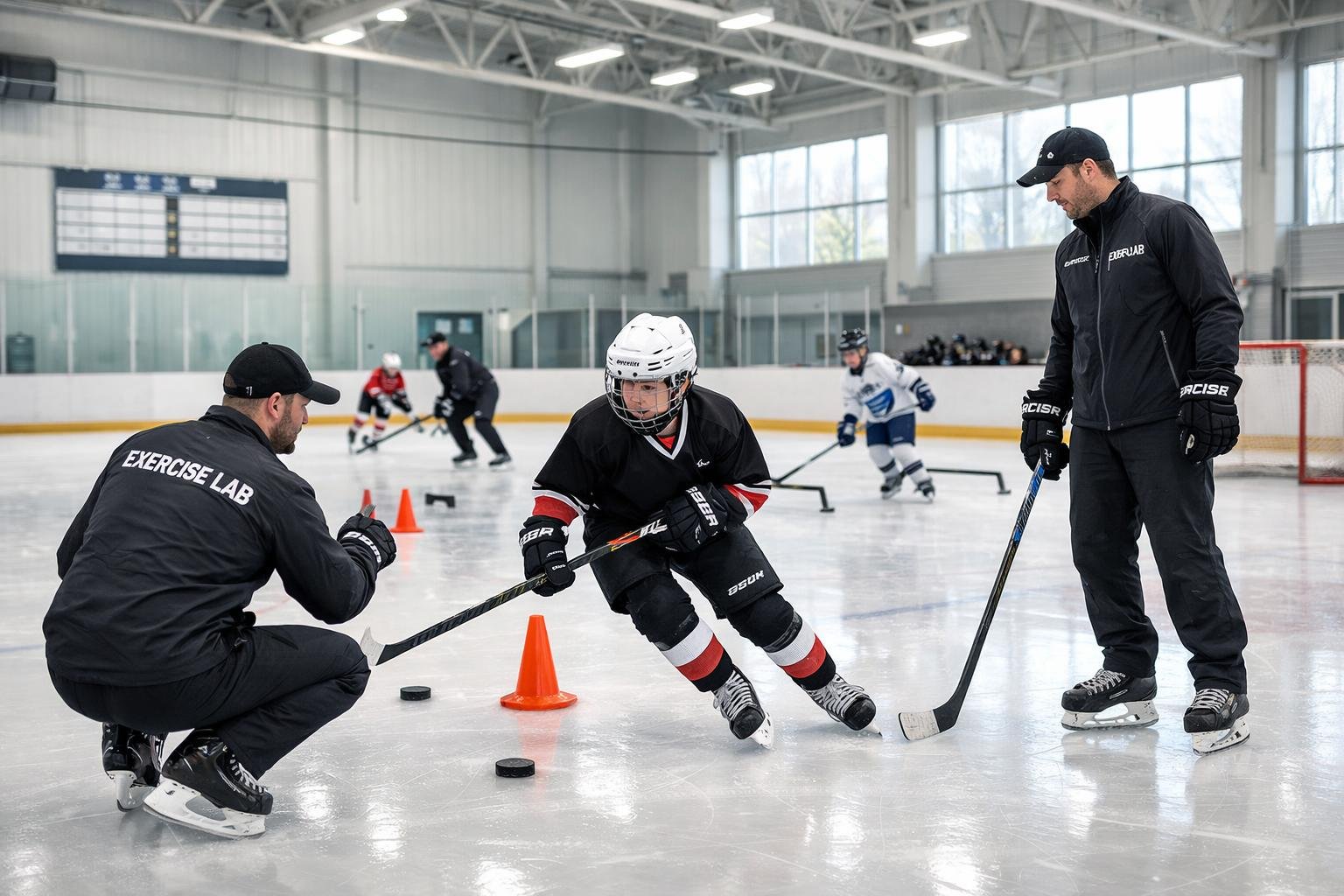
Players can register online, choose session times that fit their schedule, and train in a facility built for focused hockey development. The Exercise Lab keeps the process simple so families can plan with clarity.
How to Join the Off-Season Program
Registration is handled through The Exercise Lab’s website. Athletes select the correct age group and choose a session block that matches their level.
The Spring Program offers two- or three-session-per-week options. Pricing for spring is $720 for 16 sessions (twice per week) or $1,000 for 24 sessions (three times per week), tax included. A deposit is due at registration, with the remaining balance split across two automatic payments.
The Summer Program requires a $500 deposit at registration, with the remaining balance due by May 1, 2026. Session times are assigned by group and communicated once the full schedule is confirmed.
Parents should prepare:
- Player’s full name and birth year
- Emergency contact details
- Medical information
- A credit card on file for automatic payments
Early registration helps secure preferred time slots and group placement.
Facility Location and Amenities
The Exercise Lab operates at 210 Pony Dr Unit 2, Newmarket, ON L3Y 7B6. The facility supports both on-ice and off-ice development depending on the program.
Athletes can expect:
- Professional instruction space
- Clearly marked training areas
- Equipment for skating mechanics and puck control drills
- Strength and conditioning tools for dryland sessions
Parking and access are planned to handle youth program traffic during peak evening and weekend hours. The facility is open Monday through Friday from 5:00 AM to 10:00 PM and Saturday from 6:00 AM to 2:00 PM.
Contact and Support
The Exercise Lab provides direct communication channels for program questions and registration support. Families can reach the facility by phone at (905) 235-0212 or through the contact form on the website.
Support covers:
- Program placement guidance
- Equipment requirements
- Schedule adjustments
- Billing questions
If a player needs help selecting the right development stream, staff review playing experience and goals before confirming placement. Players receive confirmation details before the first session.
Frequently Asked Questions
The Exercise Lab delivers structured hockey training for youth and junior athletes in Newmarket. Programs cover age groups, skill focus, coach credentials, session format, and payment options.
What age groups and skill levels are accepted for hockey training programs?
The Exercise Lab works with players from U10 through U18, junior, and collegiate levels. Athletes at house league, A, AA, and AAA levels are all supported. Open groups and elite groups allow athletes to train with peers at a similar level. The program accepts registrations across age groups including U10/U11, U12/U13, U14, U15, U16, and U18.
Which on-ice and off-ice skills are emphasized in the development sessions?
Off-ice sessions focus on strength, speed, and power. Coaches target lower-body strength, core stability, sprint mechanics, and change of direction.
On-ice development places attention on skating stride, edge control, puck handling, passing, and shooting. Players also work on reaction time and small-area decision-making. Training aligns with long-term athlete development principles used in Hockey Canada’s player development resources.
How are training plans personalized and progress measured over time?
Coaches group athletes by age and level, then adjust drills and loads within each session. They scale weight, reps, and drill complexity based on the player’s ability and training age. Progress is tracked through repeat testing of speed, strength, and movement quality. Timed sprints, jump tests, and controlled strength benchmarks show clear changes over a training block.
What qualifications and experience do the coaches have?
Jason Ricci, the lead on-ice instructor, played professional hockey for seven years and brings more than 25 years of coaching experience at GTHL, OWHA, and Hockey Canada High Performance levels. He has also evaluated for USA Hockey’s U18 Women’s National Team camps.
Steve Rachikowski works as a Senior Manager with Central Scouting alongside NHL scouts. He helped develop 13 OHL draft picks and 7 NHL draft selections during his time with a Minor Midget AAA program.
What does a typical session include, and how long does it run?
Sessions run for 60 minutes. Spring groups train Monday to Thursday. Summer groups train Monday to Friday based on the selected package.
A session often starts with a dynamic warm-up. Athletes then move into speed or power work before finishing with strength training and core work. Coaches supervise each drill closely to ensure safe technique and steady effort.
How do scheduling, pricing, and payment options work?
The Spring Program runs May 4 to June 25, 2026, with options of two or three sessions per week. Pricing starts at $720 for two sessions per week and $1,000 for three, tax included. Payments are split into a deposit and two automatic installments.
The Summer Program runs June 29 to August 21, 2026, with three- to five-day-per-week options. A $500 deposit secures a spot, with the balance due May 1, 2026. Full details and registration are available on the Exercise Lab’s off-season program page.

